Remove & Go

Parquet Covered Flagstone Floor Restoration Edinburgh Southside

Restoring a Parquet Covered Flagstone Floor in Refurbished in Edinburgh Southside

I was contacted by the new owners of a townhouse in the southside of Edinburgh who needed help restoring an old Flagstone floor. They had uncovered the flagstones beneath parquet flooring during renovations and the thick adhesive was proving problematic.

Flagstone floor during Parquet and Adhesive Removal Edinburgh Southside

The clients were keen to restore the floor as a feature of their oval-shaped reception hallway, which was a highlight of their home. They wanted to retain the natural, rustic charm without making it look artificially shiny.

I went over to take a look and could see that although structurally sound the stone was heavily soiled having absorbed decades of dirt and grime so once the glue had been removed it would need a deep clean. I worked out a detailed quote for restoring the floor, which was accepted and a date set.

Removing Parquet Adhesive from Flagstones

The first challenge was to remove the thick parquet adhesive and residues. To do this the thick parts had to be carefully scrapped off until it left a thin residue. Next a strong dilution of Tile Doctor Remove & Go which is a powerful coatings remover was sprayed onto the tiles. This was allowed to dwell and soak in for about twenty minutes to give it time to break down the glue. Then it was agitated with a heavy-duty rotary floor machine fitted with a coarse black scrubbing pad. The resulting slurry was then removed with a wet vacuum.

With the bulk of the residues removed, I turned my attention to deep cleaning the stone. For this a strong dilution of Tile Doctor Pro-Clean was applied and worked into the stone using the same rotary machine and another pad. The grout lines and edges were scrubbed manually using detail brushes to ensure a consistent clean.

The slurry was extracted using a wet vacuum gain, and the floor was thoroughly rinsed with water several times to remove any remaining residues. The floor was then left to dry naturally for a few days, aided by air movers.

Sealing an Indian Flagstone Hallway

Once dry, I tested for moisture using a moisture meter to ensure the stone was ready to be sealed. Tile Doctor Ultra-Seal was chosen for this; it’s a natural look sealer that doesn’t change the stone and which would give the completely natural appearance they wanted. It’s also a full breathable and ideal for use on flagstone and other natural stone floors in older properties where damp can be a concern.

Two coats were applied to ensure full coverage and protection; Ultra-Seal is an impregnator that works by occupying the pores in the stone ensuring dirt remains on the surface where its easily cleaned away.

The transformation was stunning. The once-dull and neglected stone now looked vibrant and full of character in keeping with the historic nature of the property. Additionally, the new seal will protect the floor against stains and dirt for many years to come.

Flagstone Floor After Restoration Edinburgh Southside

The clients were delighted and commented that the restored flagstone floor had become the centrepiece of their renovation. They were also reassured to know it would be much easier to keep clean for which I recommend Tile Doctor Neutral Tile Cleaner.

If you have a flagstone floor that could use some expert attention, whether it’s been recently uncovered or simply needs a refresh, get in touch. I cover Edinburgh and the surrounding areas.


Professional Restoration of an Indian Flagstone Hallway in Edinburgh

Restoring a Parquet Covered Flagstone Floor in Refurbished in Edinburgh Southside Read More »
Victorian Tiled Vestibule Floor Renovation Trinity Edinburgh

Restoring a Heavily Soiled Victorian Tiled Vestibule Floor in Trinity Edinburgh

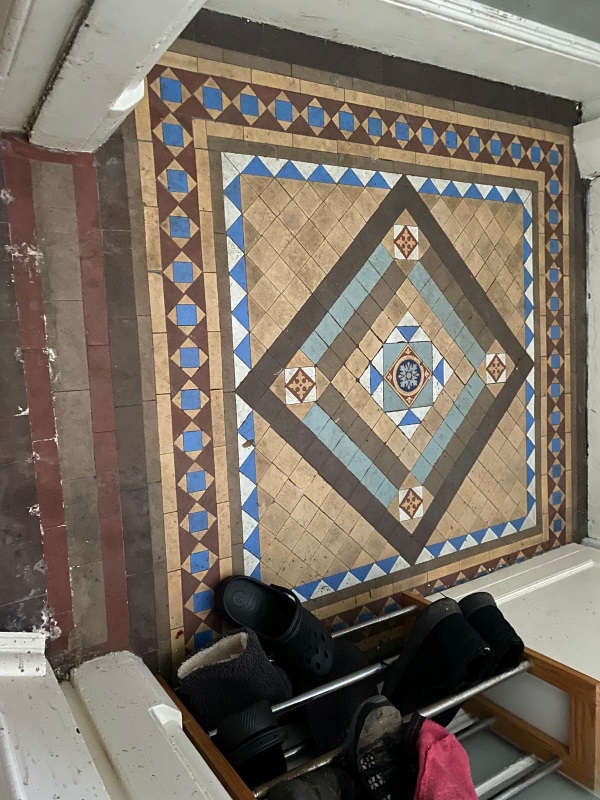
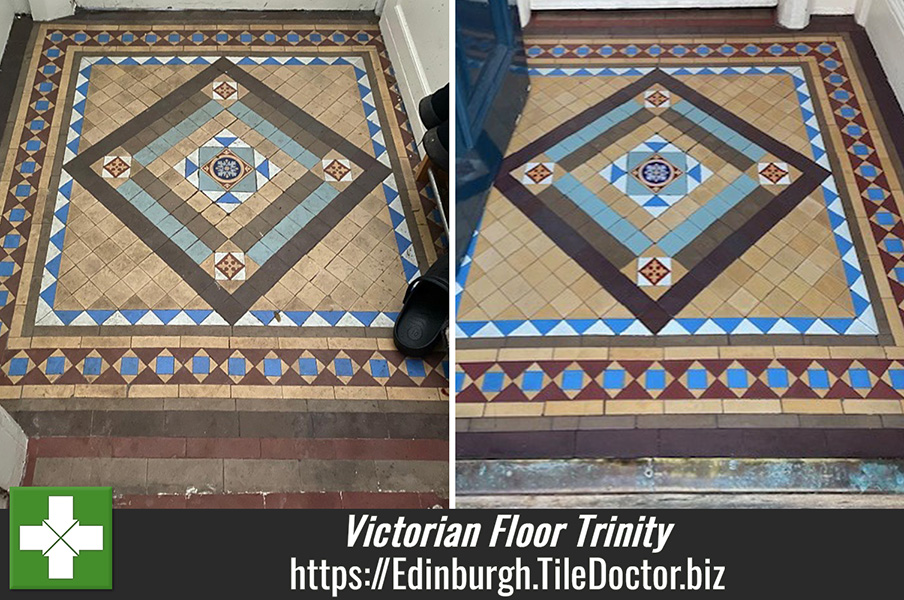
I was recently contacted by a homeowner in the Trinity district of Edinburgh, who owns a charming Victorian property. They had discovered a stunning original Victorian tiled floor in the vestibule that had been covered up for some time and was now in need of some TLC. The tiles were largely intact however they were very badly soiled, covered in adhesive residues, and dulled by decades of grime and neglect.

Victorian Tiled Vestibule Before Clean and Seal Trinity Edinburgh

Victorian tiles are a classic feature of period homes, often made from encaustic or geometric clay tiles. They’re very robust but can suffer damage or lose their vibrancy if not properly maintained. With the right cleaning products and equipment, they do come rather well and having seen some of the examples on my website of similar floors they were keen for me to work the same magic on their floor.

It wasn’t a large area so after running a few tests and measuring up I provided them with a quote that included deep cleaning the tiles including removing the adhesive and deep-seated dirt and then add a sealer for protection. Happy with the quote I got the go ahead to do the work and a date was agreed for my return.

Cleaning a Victorian Tiled Vestibule Floor

The first stage was to prep the area for work. I then applied a strong dilution of Tile Doctor Remove & Go, a powerful stripper designed to break down old sealers, adhesives, and heavy soils. The product was left to dwell for fifteen to twenty minutes before being agitated with a rotary floor machine fitted with a black scrubbing pad. This started to lift away years of embedded dirt and residue.

In areas with particularly stubborn adhesive patches, I used a handheld scraper and neat Tile Doctor Remove & Go where needed. The grout and edges were detailed using stiff brushes and handheld rotary pads. After the initial clean, the floor was thoroughly rinsed with clean water and all the fluids extracted with a wet vacuum.

The tiles were then treated to an acid wash using Tile Doctor Acid Gel, an acid-based gel cleaner that further cleans the tiles and removes mineral deposits. The extra level of cleaning really helped to bring out the original colour in Victorian tiles, it also neutralises the floor after the use of alkaline cleaners.

Victorian tiles are clay-based and quite porous, so it’s essential the floor is completely dry before sealing. I left the floor to dry for several days, using air movers to assist the process.

Sealing a Victorian Tiled Vestibule

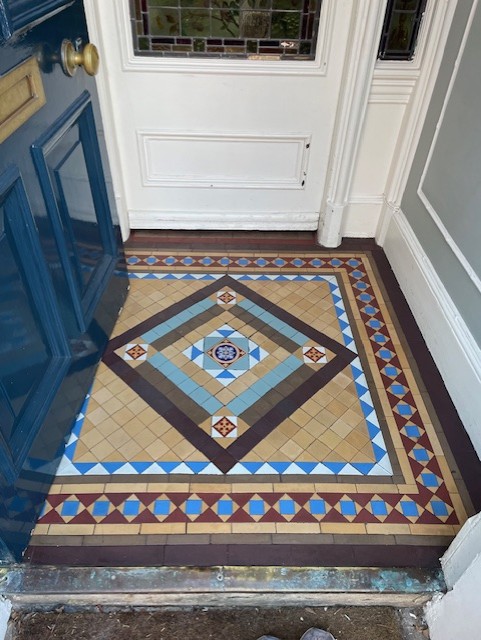
Upon return, I tested the moisture levels to ensure it was ready to seal. The readings were fine so the first of two coats of Tile Doctor Colour Grow was applied to the floor. This is a breathable, matt, colour-enhancing impregnating sealer that works really well on Victorian tiles and is also externally rates so ideal for a hallway of vestibule. This product not only protects the tiles from staining but also lifts and intensifies the natural tones in the red, black, and ochre patterned floor.

The transformation was dramatic. What was once a dull, neglected floor is now a vibrant and character-rich entranceway, showcasing the home’s original period features. The intricate patterns of the Victorian tiles are fully visible again, and the sealer gave them a lovely satin appearance. The homeowner was delighted and how well the tiles responded.

Victorian Tiled Vestibule Before Clean and Seal Trinity Edinburgh

Before leaving I took time to discuss aftercare which for a sealed tiled floor, I recommend the use of Tile Doctor Neutral Tile Cleaner which is a gentle yet effective product that won’t erode the sealer.

If you have a period floor in need of restoration, I cover the Edinburgh area and would be happy to provide a free site visit and quotation. Victorian tiles can last generations with the right care—get in touch to bring yours back to life.


Professional Restoration of a Victorian Tiled Vestibule in Edinburgh

Restoring a Heavily Soiled Victorian Tiled Vestibule Floor in Trinity Edinburgh Read More »

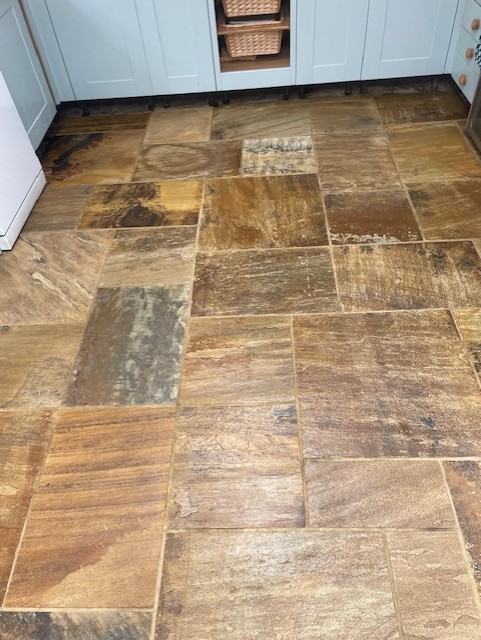
Indian Sandstone Kitchen Floor Renovation Melrose

Badly Ingrained Indian Sandstone Floor Deep Cleaned and Sealed in Melrose

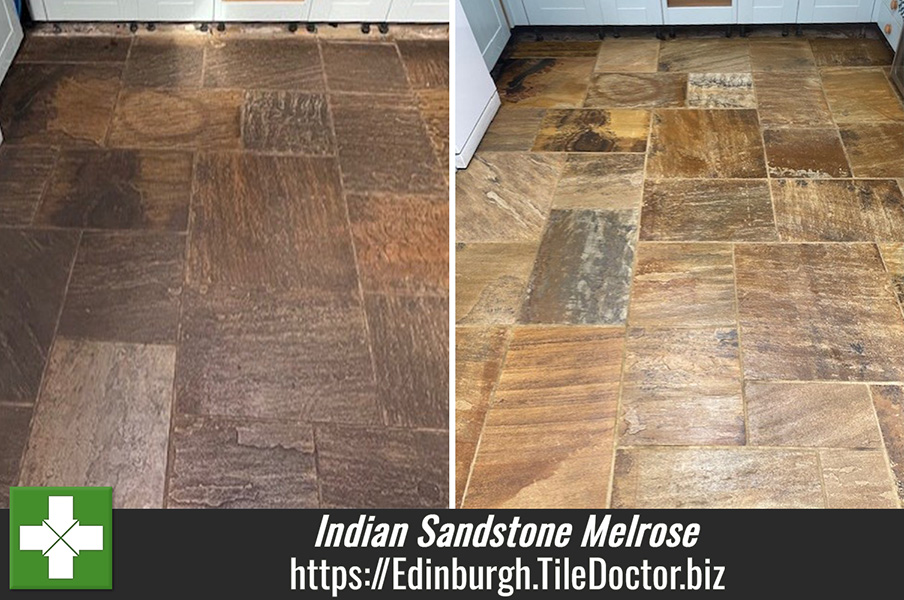
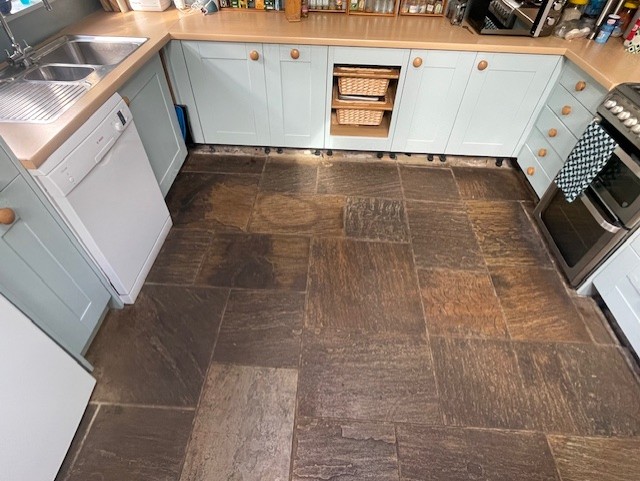
This Indian Sandstone tiled floor had been installed in the Kitchen and Dining room a property in Melrose fifty years prior. Although it was cleaned weekly the sealer had long since failed and dirt had penetrated the pores of the stone leaving it permanently dark.

The years of ingrained soiling were especially bad around the cooker and sink areas, making it impossible for standard cleaning products to make any difference. The wonderful colours and markings of each stone tile were completely hidden due to the soiling. Interestingly you could still see the original colour of the clean sandstone behind the kickboards under the kitchen units so the owner had a good idea of the floor’s potential.

Indian Sandstone Kitchen Floor Melrose Before Clean and Seal

I explained the floor would need an intensive clean to flush the years of dirt out of the pores and then a fresh sealer added to protect it going forward. Keen to have the floor restored to its original condition they accepted my quote, and a date was set for the work to start which would take two days.

Cleaning an Indian Sandstone Kitchen

On day one I removed the kick boards and started deep cleaning the Sandstone to remove the ingrained soiling. To do this the tiles were soaked with a strong dilution of Tile Doctor Remove & Go and this was left to soak in for fifteen minutes. This gives the solution time to digest the dirt and any remaining sealer so it can be lifted to the surface and cleaned away.

The floor was then scrubbed with a special silicon carbide brush fitted to a rotary floor machine. This brush really gets into the recesses of the grout lines and helps to scrub the dirt out of the stone especially if it has a riven surface.

After going over each of the stone tiles three to four times with the brush the floor was rinsed with water and all the residue removed with a wet vacuum. The floor was then given a second clean and thorough rinse to ensure all the residue had been removed.

A third clean was then completed using Tile Doctors Grout Clean-Up, which further cleans the stone and also treats efflorescence. This time the product was scrubbed in with a black pad. Once completed the floor was again rinsed with water and the residues removed with a wet vacuum as before.

Sealing an Indian Sandstone Kitchen

The floor was then left over night to dry, and I returned the next day where work started by ensuring the floor was dry by testing the moisture levels on various parts of the floor. It’s important that the floor is dry before sealing as otherwise it can look patchy.

All was well and so I started with the first coat of Tile Doctors Ultra-Seal, a natural look impregnating sealer, chosen by the client. This was allowed to dry for thirty minutes before starting on the second coat. This sealer is a tough durable sealer with a matt finish.

Indian Sandstone Kitchen Floor Melrose After Clean and Seal

Once complete the Sandstone tiles and grout looked very clean indeed and all the features of the stone were clearly visible returning the character to the floor. To maintain the fresh look and sealer going forward I recommended the tiles were cleaned using a Tile Doctors Neutral pH cleaner which lifts soiling but won’t erode the sealer.


Professional Restoration of an Indian Sandstone Kitchen in Edinburgh

Badly Ingrained Indian Sandstone Floor Deep Cleaned and Sealed in Melrose Read More »

Scroll to Top